Why Tree Removal Planning Matters for Your Property
Tree removal is not something most homeowners think about until a storm passes or a limb drops on the driveway. By then, the situation is urgent, and good options are limited. That is why tree removal planning matters long before you pick up the phone. A little foresight can save you money, reduce risk, and protect the parts of your landscape you want to keep.
I have seen too many people rush into removing a tree because they thought it was dying or dangerous. Sometimes they were right, but often they missed the chance to preserve a healthy specimen or avoid unnecessary work. In DeLand, Florida, where live oaks and pines dominate the skyline, a measured approach to tree removal planning makes a real difference. The city has a tree preservation ordinance that requires permits for removing certain trees, and fines can add up fast if you skip the paperwork.
Start with a Tree Risk Assessment
Before you decide whether to remove a tree, you need to understand what you are dealing with. A tree risk assessment looks at the tree's structure, health, and the targets around it. An ISA certified arborist can perform this evaluation and give you an arborist report that outlines the tree's condition. That report becomes the foundation of your tree removal planning. It tells you whether the tree is a hazard, whether it can be saved with pruning or cabling, and what the removal would involve.
I recall a job in a neighborhood near Stetson University. The homeowner had a large laurel oak leaning over their driveway. They wanted it gone. The arborist report showed the tree was actually stable, just growing at an angle toward the light. We pruned it back and installed a cable system. That tree is still standing five years later. The cost of the assessment was a fraction of what removal would have been.
If the assessment does recommend removal, the next step is a site survey. This is not just a walk around the tree. The arborist will look at soil conditions, underground utilities, and the root protection zone. You cannot just cut a tree down and hope for the best. Damage to the lawn, irrigation, or septic system can turn a simple job into a costly mess. A good site survey accounts for all of that.
Understand the Regulations
DeLand has specific rules about tree removal. The tree preservation ordinance requires a permit for any tree over a certain diameter, usually measured at chest height. You also need permission if the tree is a protected species, like a live oak or a sabal palm. Ignoring these rules can lead to fines and a requirement to plant replacement trees. That is why tree removal planning must include a check of local codes.
If the tree is near a power line, things get more complicated. Utility arboriculture is a specialized field. The utility company may have the right to trim or remove trees that threaten lines. But if you want the tree removed completely, you might need to coordinate with them. The emergency response plan you develop with the arborist should account for these overlaps, especially if the tree is in a high-risk location.
Get a Realistic Cost Estimate
People often ask me how much tree removal costs. The answer depends on a dozen factors. The size of the tree, its location, the equipment needed, and the disposal method all play a role. A cost estimate from a reputable company will break down these items. Do not trust a quote that comes without a site visit. Blind estimates are a red flag.
For example, a small tree in an open yard might cost a few hundred dollars. A large oak leaning over a house could run into the thousands. Crane-assisted removal adds to the cost but may be the only safe option when the tree is too close to structures. A stump grinder is usually needed afterward to prevent regrowth and trip hazards. Some companies include stump grinding in the quote, others charge extra. Ask upfront.
Property damage liability is another factor. If the removal company damages your fence, driveway, or roof, their insurance should cover it. Make sure the company carries proper coverage before you sign anything. You do not want to be stuck with a bill because a tree fell the wrong way.
Plan for the Aftermath
Once the tree is down, you have to deal with the debris. A typical removal produces a lot of wood. Some of it can be turned into mulch, which is great for your garden beds. Larger pieces can be cut into firewood, though you need to season it properly before burning. If you do not want the wood, the company should haul it away.
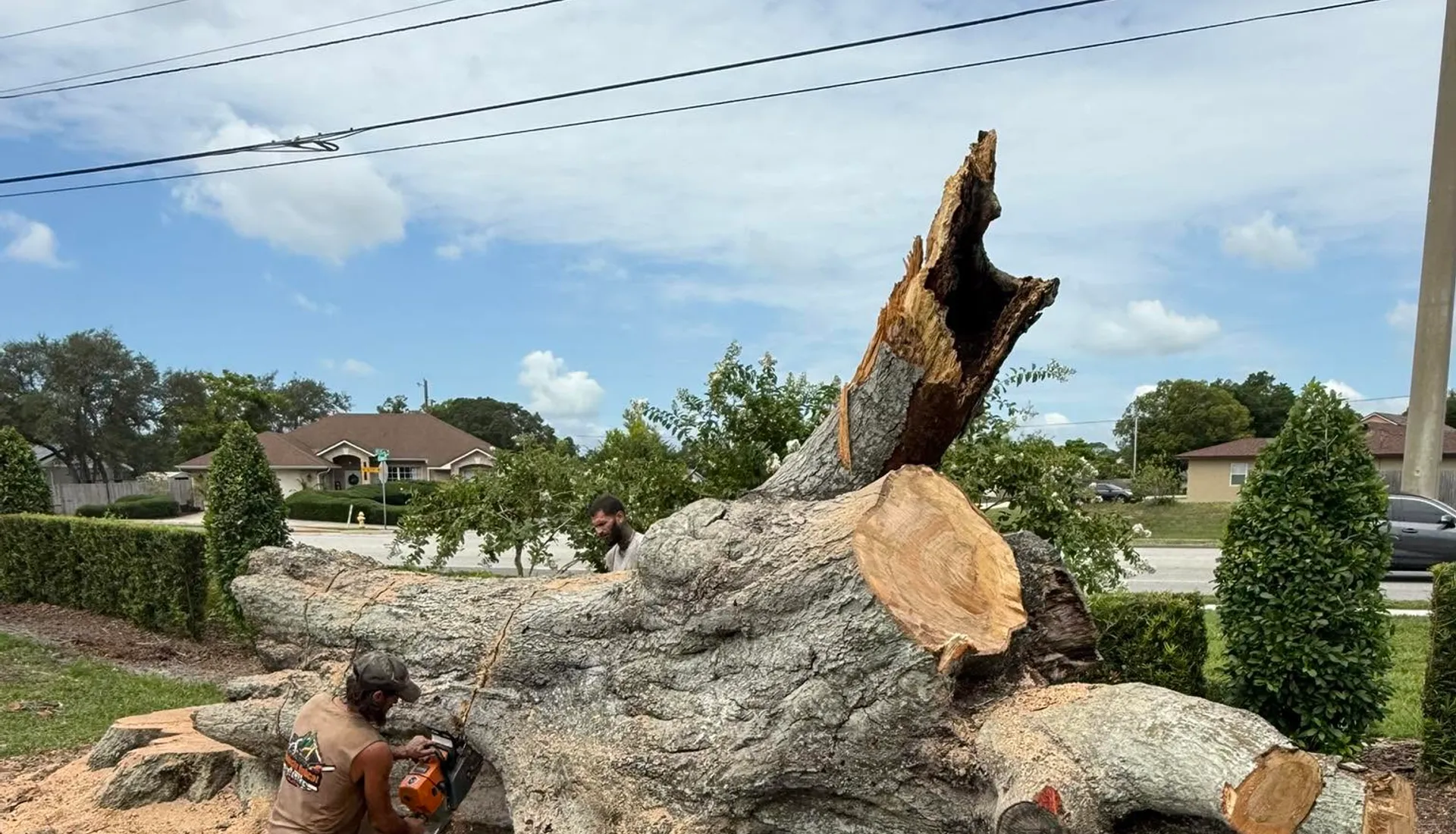
The stump is another issue. If you leave it, you might get suckers growing from the roots. A stump grinder can take it down to below grade. Then you can top the area with soil and seed it. Be careful about soil compaction during this process. Heavy equipment can compress the ground, making it hard for new plants to grow. The root protection zone should be marked before any work starts so that the rest of your landscape stays healthy.
Emergency Situations Are Different
Sometimes you cannot plan. A storm blows through, and a tree comes down on your car or blocks your driveway. In those cases, you need an emergency response plan already in place. Know who you will call. Keep the number of a reliable tree service in your phone. In DeLand, storm season runs from June through November, and the wait time for emergency removal can stretch into days if you are not prepared.
OSHA has specific guidelines for tree removal operations, especially when chain saws and cranes are involved. A professional crew follows those rules for safety. Do not hire someone who shows up with a chain saw and no safety gear. That is a recipe for injury or property damage.
Deforestation is a serious issue, and I am not talking about the Amazon. Even on a small property, removing too many trees can change the microclimate, increase runoff, and reduce property value. Tree removal planning should include a discussion of what stays and what goes. If you are clearing land for a new structure, work with an arborist to save the best trees. A good plan leaves the landscape better than you found it.
Work with Professionals
You can DIY a lot of things around the house. Tree removal is not one of them. A certified arborist brings training, experience, and insurance. They know how to rig ropes, fell a tree in a tight space, and use a crane without damaging the surrounding area. They also understand tree biology, so they can tell you if the tree can be saved.
An arborist report is worth the investment. It gives you a document you can show to the city for a permit, to your insurance company, or to a potential buyer if you sell the house. It also serves as the backbone of your tree removal planning, guiding every decision from the initial site survey to the final cleanup.
If you are in DeLand, Florida, and you are thinking about removing a tree, start with a risk assessment. Talk to a local company that knows the ordinances and the soil. Get a cost estimate that includes everything. And plan for what comes after the tree hits the ground. Good tree removal planning turns a stressful job into a manageable one.